

How It Works
When you create or edit a UI Plan, SQL Review checks its SQL and reports findings. Release-based Plans use SQL Review in CI instead of these Plan checks: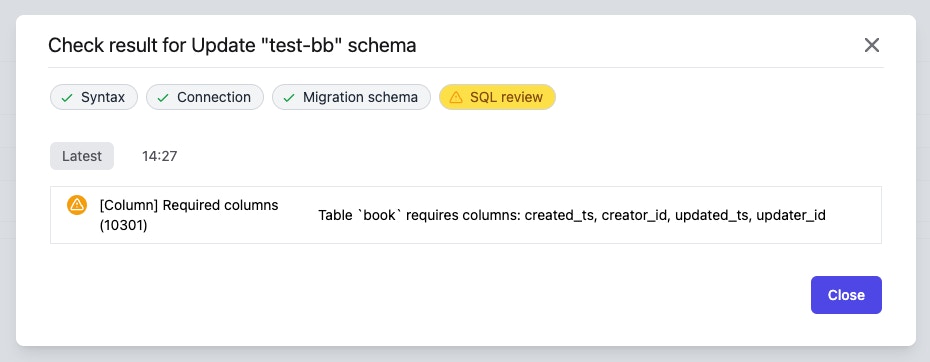
Review Results
SQL Review results appear directly in the Plan interface, showing:- Errors: Must be fixed before the change can proceed
- Warnings: Should be reviewed but won’t block execution
- Passed checks: Confirmations that rules are satisfied
Configuring Review Policies
Review policies determine which rules are enforced for your database changes. You can configure these policies at the environment or project level.Configure SQL Review Policies
Learn how to set up and customize SQL Review policies for your environments and projects
Review Rules Reference
Bytebase provides comprehensive review rules for each database engine, covering:- Schema design best practices
- Performance optimization
- Security requirements
- Naming conventions
SQL Review Rules
Browse the complete list of available review rules for each database engine
Handling Review Feedback
When SQL Review identifies issues:- Review the findings: Click on each issue to understand what needs to be fixed
- Update your SQL: Modify the statements to comply with the rules
- Re-run the review: The review automatically runs again when you save changes
- Proceed when cleared: Once all errors are resolved, continue with the approval process